
Products
Brake fluids
DOT 3, DOT 4, DOT 4 LV and DOT 5.1 fluids for automotive hydraulic brake systems.
- DOT 3
- DOT 4
- DOT 4 LV
- DOT 5.1
Brake fluid is intended for use in automotive hydraulic brake systems operating at ambient temperatures between −50 °C and +50 °C. It is a heat-resistant fluid designed to protect internal brake components against corrosion, and it does not change its properties chemically even under large temperature swings.
Brake fluids are usually based on glycol or on silicone. These two materials are not compatible with each other, so it is essential to know which brake fluid you are using before topping up.
DOT 3, DOT 4 and DOT 5.1 are used for cars and trucks. DOT 5 is more often used for military vehicles, sports cars and motorcycles, which require a higher boiling point.
Range
GLINE brake fluids
Shown in the 1 l pack. Other volumes and packaging to order.
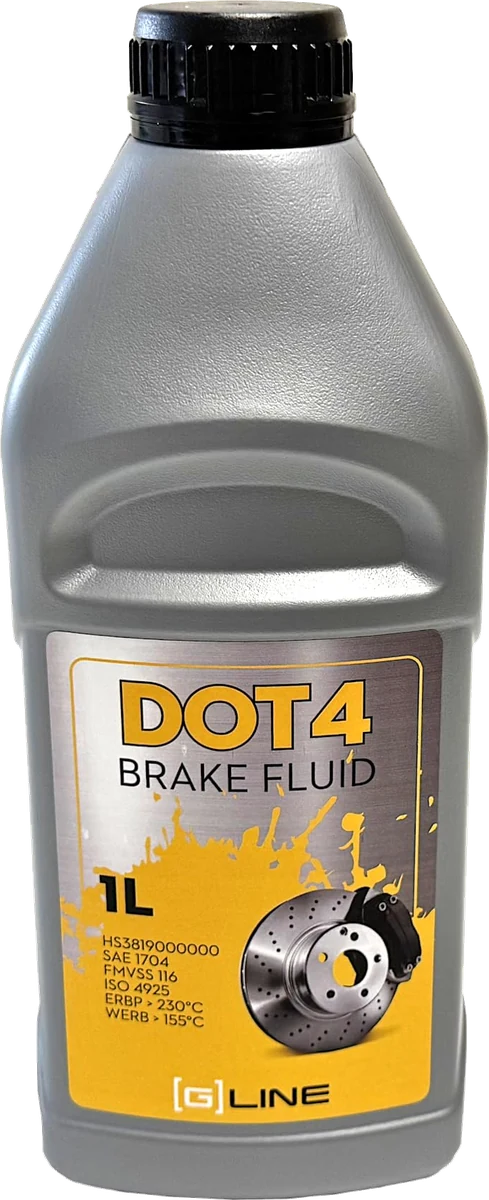
DOT 4
- SAE J1704
- FMVSS 116
- ISO 4925
- Dry boiling point
- > 230 °C
- Wet boiling point
- > 155 °C
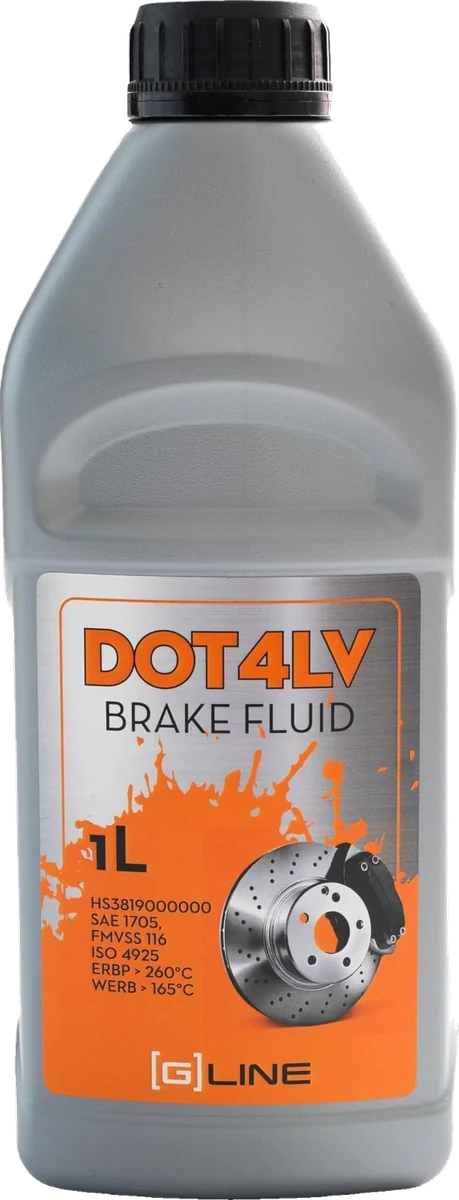
DOT 4 LV
- SAE J1705
- FMVSS 116
- ISO 4925
- Dry boiling point
- > 260 °C
- Wet boiling point
- > 165 °C
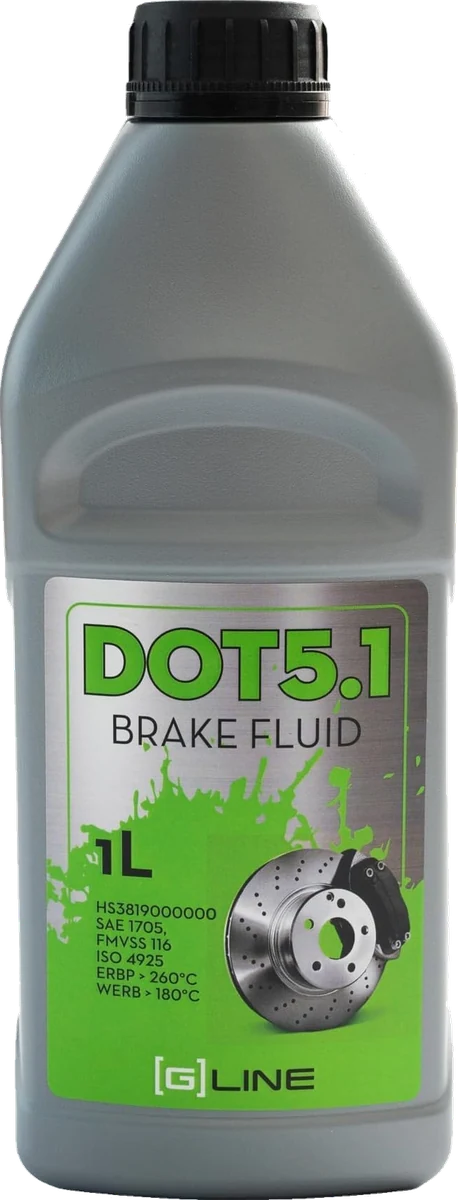
DOT 5.1
- SAE J1705
- FMVSS 116
- ISO 4925
- Dry boiling point
- > 260 °C
- Wet boiling point
- > 180 °C
Standards
Built to international standards
Every brake fluid Ltd. Greenlab Solutions produces is formulated and tested against the requirements of three separate standards bodies.
- FMVSS — the Federal Motor Vehicle Safety Standards in the USA classify three main classes of brake fluid under FMVSS 116: DOT 3, DOT 4 and DOT 5. DOT 5 is further divided into DOT 5 (silicone-based brake fluid, SBBF) and DOT 5.1 (non-silicone-based).
- ISO 4925 — the International Organization for Standardization classifies brake fluids into Class 3, Class 4, Class 5.1 and Class 6.
- SAE — the Society of Automotive Engineers classifies three further types: SAE J1703, SAE J1704 and SAE J1705.
Ltd. Greenlab Solutions can supply DOT 3, DOT 4, DOT 4 LV and DOT 5.1 brake fluids.
At the customer's request, the product can be filled into IBC containers and 200 l drums, or packaged in smaller containers such as 0.5 l and 1 l bottles and 4, 5, 10 and 25 l canisters.
Documents
Technical documentation
Need brake fluid under your own label?
Tell us the class, volume and packaging — we will prepare an offer.